


The best beginner climbing peaks in Nepal almost always narrow down to three contenders. If you’ve trekked in Nepal before and you’re now looking at your first roped climb, three names will keep coming up: Island Peak, Lobuche East, and Mera Peak.
All three sit in the 6,000-metre range, all three are managed as “trekking peaks” by the Nepal Mountaineering Association, and all three are genuinely climbed by first-timers every season. But they are not interchangeable, and choosing based on name recognition alone is how climbers end up on a route that doesn’t match their skills. This guide compares the three directly — difficulty, altitude, permits, and who each peak actually suits — so you can pick the right first climb rather than the most popular one.

Island Peak, Lobuche East, and Mera Peak: The Best Beginner Climbing Peaks in Nepal
Island Peak (6,189m), Lobuche East (6,119m), and Mera Peak (6,476m) dominate beginner peak-climbing conversations in Nepal for a practical reason: all three sit inside or close to the Everest region.
They can also be combined with an established trekking route for acclimatization, and all three are regulated under the NMA’s trekking peak category rather than requiring a full expedition permit.
That regulatory category matters — it means established routes, known logistics, and guides who climb these mountains regularly, rather than a one-off expedition into unfamiliar terrain.
They are not, however, equally difficult. That’s the part most comparison articles gloss over.
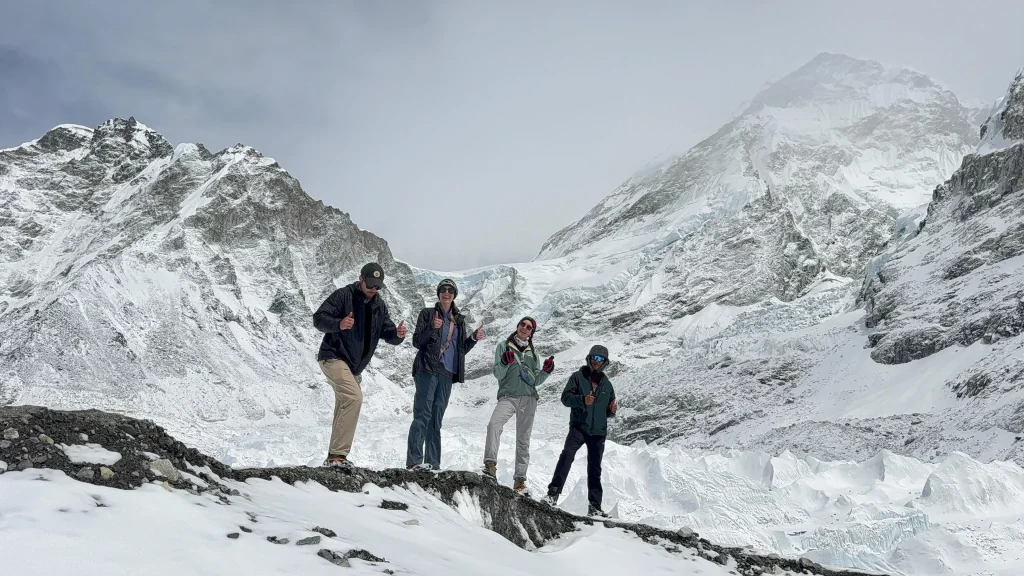
Peak Climbing Difficulty in Nepal: Physical vs. Technical Demands
The most useful distinction for a first-time climber isn’t “easy vs. hard” — it’s physically demanding vs. technically demanding, because these are different skills and different peaks test them differently.
Mera Peak is the highest of the three at 6,476m, but it is the least technical. The standard route is a long snow slope at roughly 30–35 degrees, with a short fixed-rope section near the summit. There’s no serious scrambling and minimal exposure. What makes Mera Peak hard is altitude and duration — you’re spending more days above 5,000m than on either of the other two peaks, and summit day is long. Climbers who are strong trekkers but have never used crampons or an ice axe in anger generally find Mera Peak the most approachable of the three, provided they respect the altitude.
Island Peak (Imja Tse) steps up the technical demand. The final headwall is a genuinely steep ice and snow slope — sources place it anywhere from 45 to 70 degrees depending on seasonal conditions — ascended on fixed rope using a jumar. Below that, there’s glacier travel with crevasse crossings, sometimes on ladders. It’s still considered non-technical by Himalayan mountaineering standards, but it demands comfort with exposure and basic rope work that Mera Peak simply doesn’t require.
Lobuche East is where opinions genuinely diverge, and it’s worth saying plainly: multiple experienced operators rank it as the most technical of the three, while others argue the difficulty is overstated relative to Island Peak. What’s consistent across sources is this — Lobuche’s summit day involves more sustained steep ground (rock and ice mixed terrain, not just snow), a longer push from high camp, and a narrower, more exposed summit ridge. If Island Peak has one hard section, Lobuche tends to have a harder sustained middle.
In short: Mera Peak tests your legs and lungs. Island Peak tests your comfort on a rope. Lobuche East tests both, for longer. Whichever you choose, all three remain among the best beginner climbing peaks in Nepal for a first roped ascent.
Nepal Peak Climbing Permits and Regulatory Requirements
All three peaks fall under Nepal Mountaineering Association jurisdiction as trekking peaks, which means they require an NMA climbing permit rather than a full Department of Tourism expedition permit. Permit costs are season-dependent and have changed in recent years, so treat any specific figure as something to reconfirm before booking:
- NMA trekking peak permits are generally priced by season, with spring (March–May) and autumn (September–November) costing more than winter and summer
- Additional costs typically apply for national park entry (Sagarmatha National Park for Island Peak and Lobuche; Makalu Barun for Mera Peak), local municipality fees, and in some cases a refundable garbage deposit
- A certified climbing guide is a practical requirement even where not strictly mandated by regulation — these are not solo objectives for first-time climbers
Because permit structures have been revised more than once recently, confirm current NMA rates directly with Highland Expeditions or the NMA before finalizing a budget.
What First-Time Peak Climbers in Nepal Consistently Underestimate
- Altitude affects you regardless of fitness. Being a strong trekker at sea level doesn’t predict how you’ll respond above 6,000m. Acclimatization schedule matters more than gym fitness.
- Summit day is longer than expected. Alpine starts (often before 2 a.m.), several hours of climbing in the dark and cold, and a return to camp that can take as long as the ascent — this catches people off guard even when they know the itinerary on paper.
- Rope familiarity matters more than raw strength. On Island Peak and Lobuche especially, climbers who’ve never used a jumar or fixed-rope ascender on steep ground often find the mental adjustment harder than the physical one. A day of practice at a lower camp before the summit push makes a real difference.
- Weather windows are narrow. All three peaks are climbed in spring and autumn for a reason — outside those windows, conditions become unpredictable and many operators won’t run trips at all.
Which Beginner Climbing Peak in Nepal Should You Choose First?
If you have strong trekking fitness, no technical climbing background, and want the most altitude for the least technical demand: Mera Peak.
If you want a genuine taste of technical climbing — fixed ropes, a real headwall, some exposure — without committing to the hardest option: Island Peak.
If you already have some scrambling or basic rope experience and want the most complete introduction to Himalayan mountaineering before attempting something like Ama Dablam: Lobuche East. Matching your background to the right objective is the real skill in choosing among these beginner climbing peaks in Nepal.
Some climbers combine two peaks in a single trip — commonly Island Peak with a Lobuche or Mera add-on — using the first peak partly as acclimatization for the second. This is a legitimate strategy, not just an upsell, provided the itinerary builds in genuine rest days rather than back-to-back summit pushes.

FAQs About Beginner Peak Climbing in Nepal
What is the easiest peak to climb in Nepal for a first-timer?
Mera Peak is generally considered the least technical of the three, since the route is mostly a long snow slope with only a short fixed-rope section near the summit. It’s still a serious high-altitude climb, but it doesn’t demand the rope skills or exposure tolerance that Island Peak and Lobuche East require. That relative ease is exactly why it’s usually the first of the beginner climbing peaks in Nepal that first-timers attempt.
Do I need previous climbing experience for Island Peak?
Not formally, but prior experience with crampons, an ice axe, and fixed-rope ascending (using a jumar) makes a significant difference. Reputable operators typically run a skills day at a lower camp before the summit attempt to cover this.
Is Lobuche East harder than Island Peak?
Most experienced guides consider Lobuche East at least as technical as Island Peak, and some rank it higher due to sustained mixed terrain and a more exposed summit ridge. A minority of sources argue the difficulty gap is overstated. Treat both as moderate-to-serious technical climbs requiring guide support.
Can beginners climb two peaks in one trip?
Yes — combining two of these peaks (commonly Island Peak with Lobuche or Mera) is a common and legitimate itinerary, often using the first summit as acclimatization for the second. This only works safely with adequate rest days built in between.
What permits do I need for these peaks?
All three require an NMA trekking peak permit for these beginner climbing peaks in Nepal, plus relevant national park entry fees (Sagarmatha National Park for Island Peak and Lobuche East; Makalu Barun National Park for Mera Peak). Permit costs vary by season and have been revised in recent years — confirm current rates before budgeting.
What’s the best season to climb these peaks?
Spring (March–May) and autumn (September–November) are the standard climbing windows for all three peaks, offering the most stable weather. Outside these windows, conditions become significantly less predictable.
How fit do I need to be?
You should be able to comfortably complete multi-day trekking at altitude before attempting any of these peaks. Beyond general fitness, cardiovascular endurance matters more than raw strength, since summit days involve sustained effort at altitude over many hours. This baseline fitness matters for all of these beginner climbing peaks in Nepal, not just one of them.
Choosing Your First Climbing Peak in Nepal With Confidence
None of these three peaks is objectively “the beginner peak” — each tests something different, and the right choice depends on what kind of climber you’re trying to become. If you’re unsure which fits your experience and goals, Highland Expeditions can walk through route difficulty, acclimatization planning, and realistic timelines before you commit to a permit and itinerary. Whichever route you take, choosing wisely among these beginner climbing peaks in Nepal is what turns a first roped climb into a safe, memorable one.

