

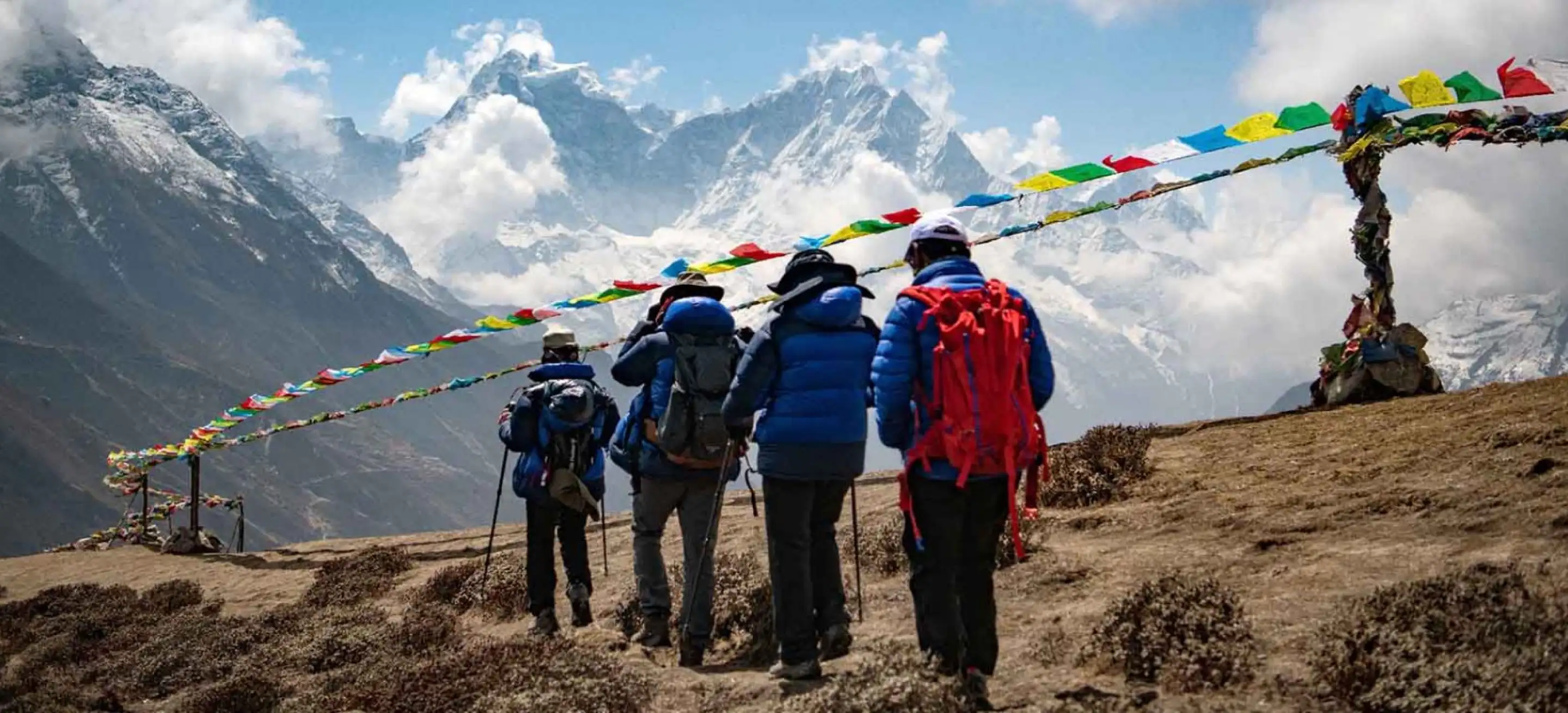
We’ve been walking these trails since before Highland Expeditions existed as a company. Our founder, Kunga Sherpa, grew up in the Khumbu and has spent more than 35 years in these mountains, including summits of Everest, Cho Oyu, and Shishapangma. His son Passang, who runs our day-to-day operations, has been guiding for over 15 years. When we talk about safety on this page, we’re not repeating a policy someone wrote for us. This is how we actually run trips, because it’s how we’d want a trip run for our own family.
Trekking and climbing here carries real risk, and we’re not going to pretend otherwise. What we can do is control everything within our reach: how a trip is planned, who leads it, what’s carried on the trail, and how fast help arrives if something goes wrong. Here is exactly how we handle each of those.
How We Plan for Safety Before You Arrive
Every itinerary we build comes down to three things: altitude, acclimatization, and knowing which campsites and trails are actually good ones, not just the fastest line on a map. Every one of our climbing trips and Everest treks has contingency days built in, because we’ve seen what happens when a group has no slack left and starts making rushed decisions near the top.
Before every season starts, our team sits down and reviews every trip: the route conditions, the staffing, the protocols. This isn’t paperwork we did once and filed away. Conditions on these routes shift year to year, so we go through it fresh every season.
Once you book with us, you get a full trip brief before you ever leave home: what the trip actually involves, how it’s graded, the fitness it demands, and a complete equipment checklist. We’d rather you find out what you’re taking on while you’re still training at home than on day three of the trek.
Our Guides and Their Training
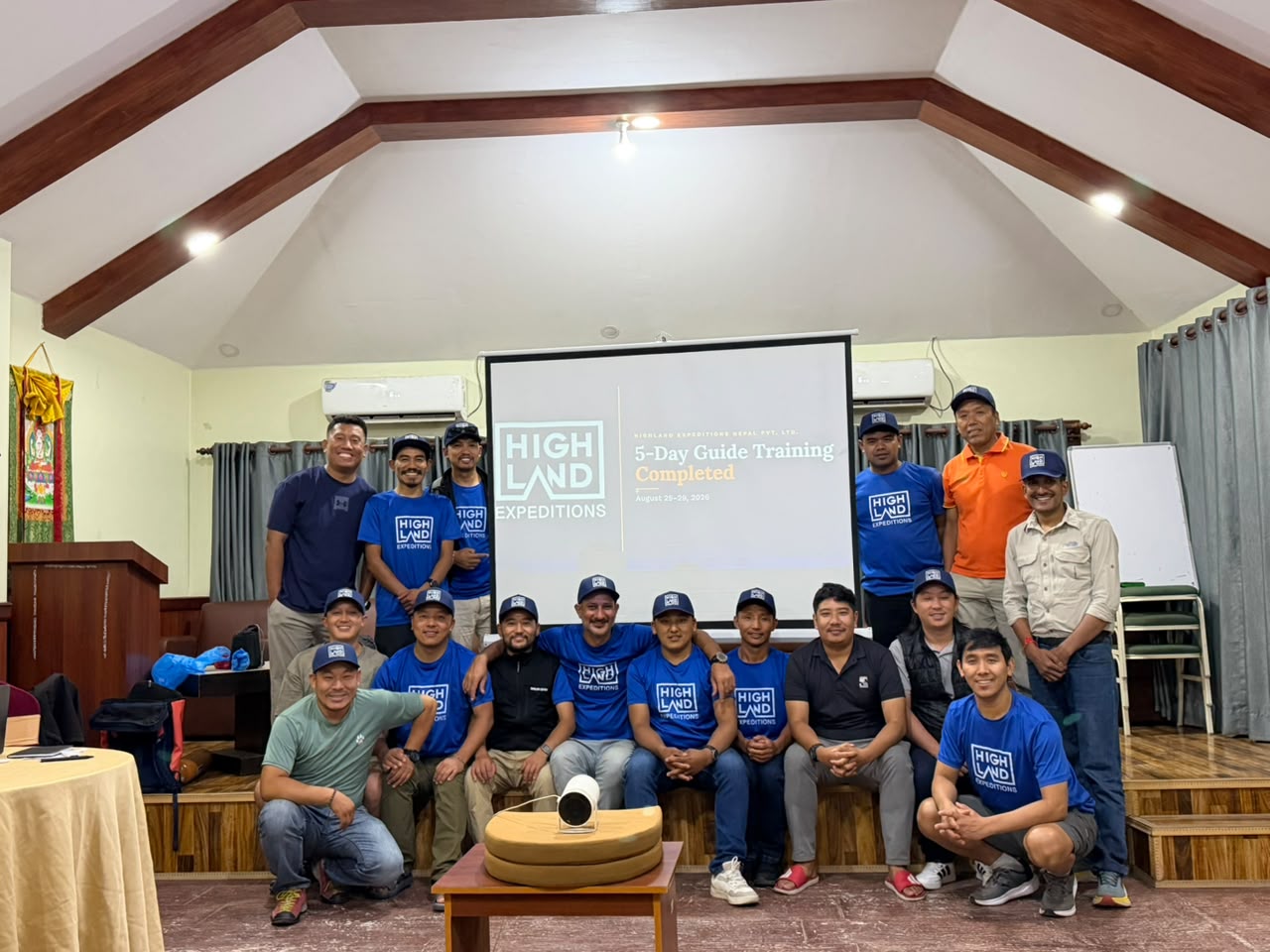
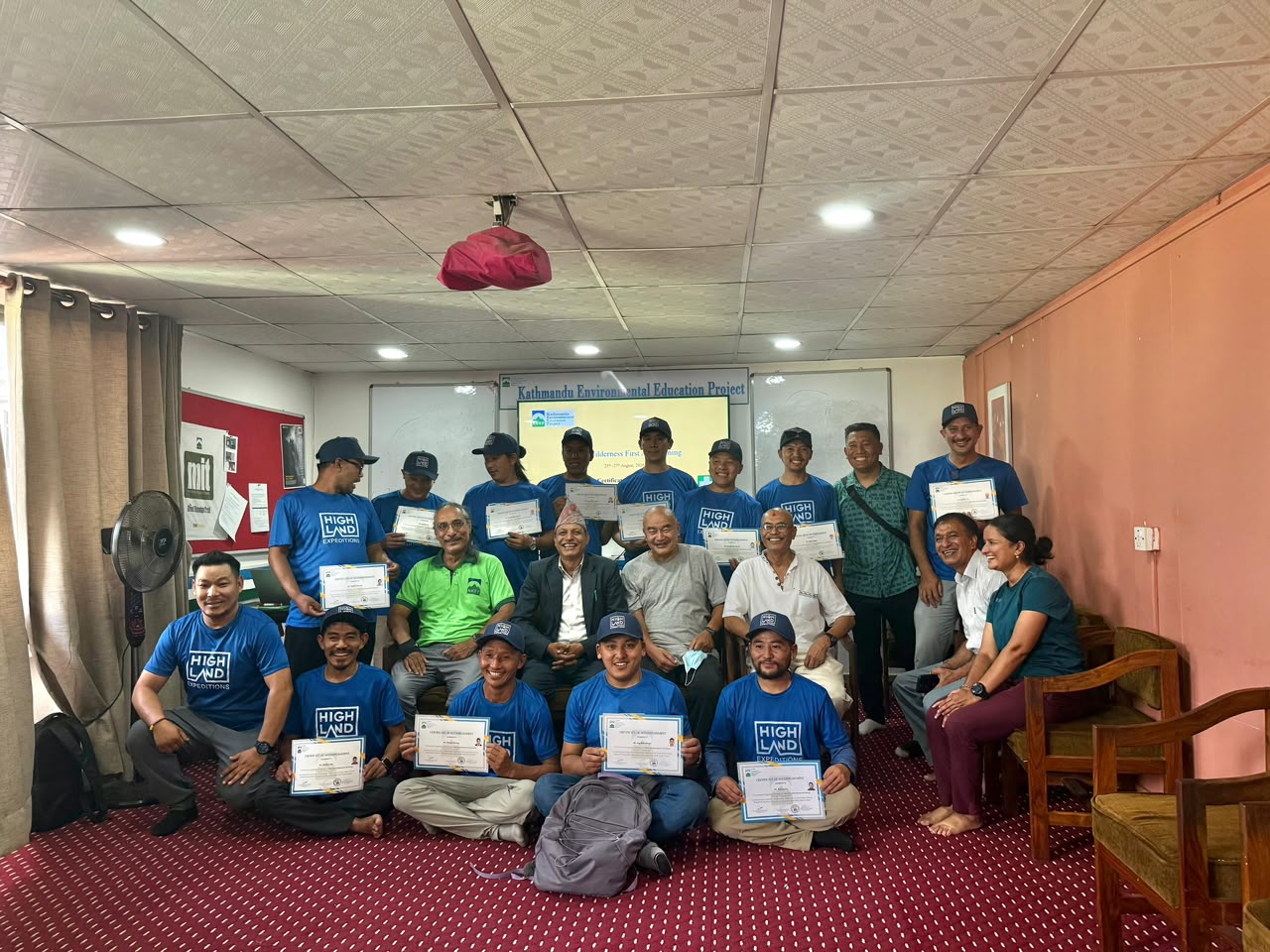
We run a structured training program for our guides every year, not because a regulation requires it, but because we’ve watched what a well-trained guide does differently in a real situation. The most recent cycle ran August 26 to 29, 2026, in Kathmandu. The first three days were hands-on first aid training: injury assessment, immediate care, how to keep a bad situation from becoming a worse one. The last two days were run in-house, covering leadership, teamwork, emergency response, and our own protocols, so every guide we send out is working from the same playbook, not improvising on the spot.
This year’s training happened to wrap up shortly before flash floods hit parts of Nepal, causing real loss and disruption in some communities. We didn’t train because of the floods; we do this every year regardless. But it was a hard reminder of something we already believe: we can’t control the weather or the terrain, but we can control how ready our people are when something happens.
Every guide on our team carries first aid training and high-altitude medical training as a baseline, not an extra. On trekking trips, that’s one senior leader or guide plus one assistant guide for every four clients, and one porter for every two. On climbing trips, it’s one senior climbing leader or guide plus one climbing Sherpa for every three clients, and one porter for every two. We keep these ratios because we’ve seen what happens when one person in a group needs help and there isn’t enough staff to give it without leaving the rest of the group unattended.
Equipment and Medical Resources on the Trail
Every trip we run carries a first aid kit with standard medicines and a supplementary oxygen system for emergencies. If you want extra reassurance, we can add a High-Altitude Mountain Doctor to your trip for an additional cost. We carry these because altitude sickness is the most common serious risk on our routes, and what happens in the first few minutes, before any evacuation is even possible, is usually what decides the outcome.
We provide a higher number of staff to client ratio on all our trips.
On Trekking trips: 1 Senior leader/guide, 1 assistant guide for every 4 participants and 1 porter for every 2 participants.
On climbing trips: 1 senior climbing leader/guide, 1 climbing Sherpa for every 3 participants and 1 porter for every 2 participants excluding porters for climbing gears.
Communication and Emergency Response
Mobile coverage disappears on long stretches of our routes, so our guides carry satellite phones on remote trips. That way, if something happens, we’re not waiting for a signal that might never come. If a helicopter evacuation is needed, we coordinate it directly with your insurance provider ourselves. During peak season, someone from our team is reachable 24 hours a day, because a problem on the trail doesn’t wait for office hours in Kathmandu, and neither should we.
Safety and Emergency Protocols
Every trip we run operates under established emergency and rescue protocols, covering medical emergencies, altitude-related illness, accidents, and any situation that calls for evacuation. How we respond depends on the nature and severity of the emergency.
Our Response to Recent Flooding in Nepal
The recent flash flooding in parts of Nepal has understandably made some people nervous about planning a trip here, and that’s a fair question to ask. This isn’t a distant headline for us. Our team, our staff, and our families live here. In light of the flooding and what it’s done to some communities, we donated NPR 100,000 to the Prime Minister’s Relief Fund, and we’d ask anyone who’s able to do the same.Being prepared for our clients, looking after our own guides and staff, and standing by our community when something like this happens all come from the same place for us. Stay safe out there, and we’ll see you on the trail.
