


 Recommended by 99% of travelers
 Group Size
Min 1 Max 15
Duration
12 Days
Grade
Max. Altitude
4,500m/14,760ft
Activity
Trekking in Nepal
Accomodation
Mardi Himal Trek Highlights
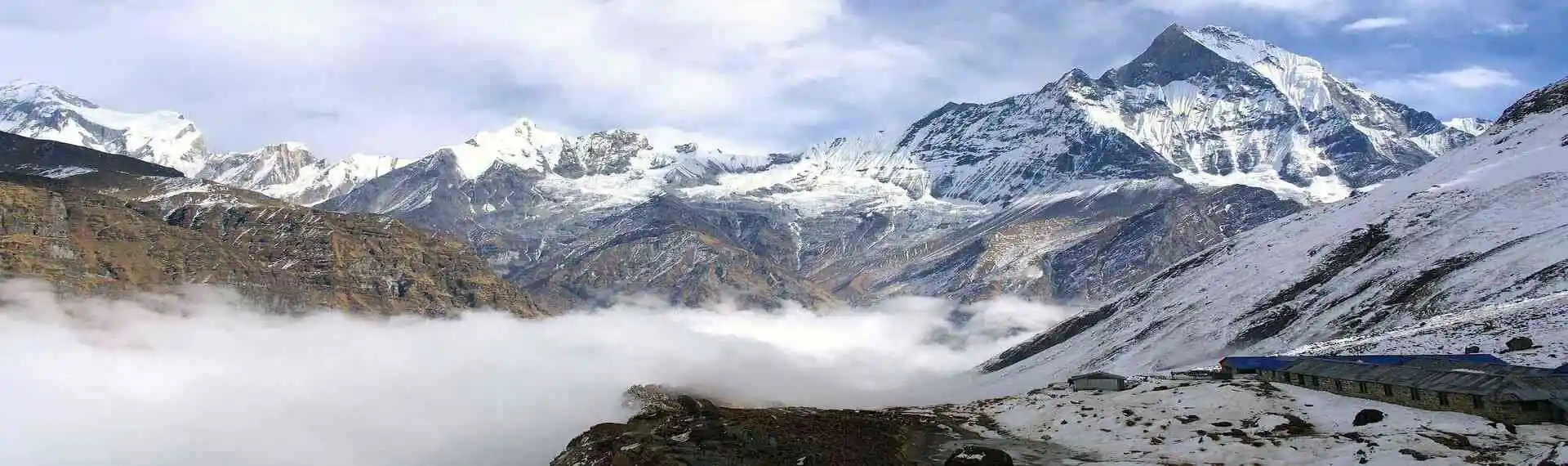
- Spectacular view of the Annapurna ranges, including Annapurna South, Machhapuchhre, Lamjung Himal, and many others.
- Walk through the peaceful and serene trails while deeply connecting with nature.
- Witness a magical hour of sunrise over the peaks of Annapurna and Machhapuchhre from Mardi Himal Base Camp.
- Experience Gurung and Magar culture along the way to Mardi Base Camp.
- Walk through the colorful blooms of the rhododendron forest in Spring.
- Experience a stunning ridge walk above the clouds.
- Witness sunset views over the hills and terraced villages.
- Walk through the conservation area of Annapurna, where you can witness a diverse array of wildlife and vegetation.
Mardi Himal Trek Overview
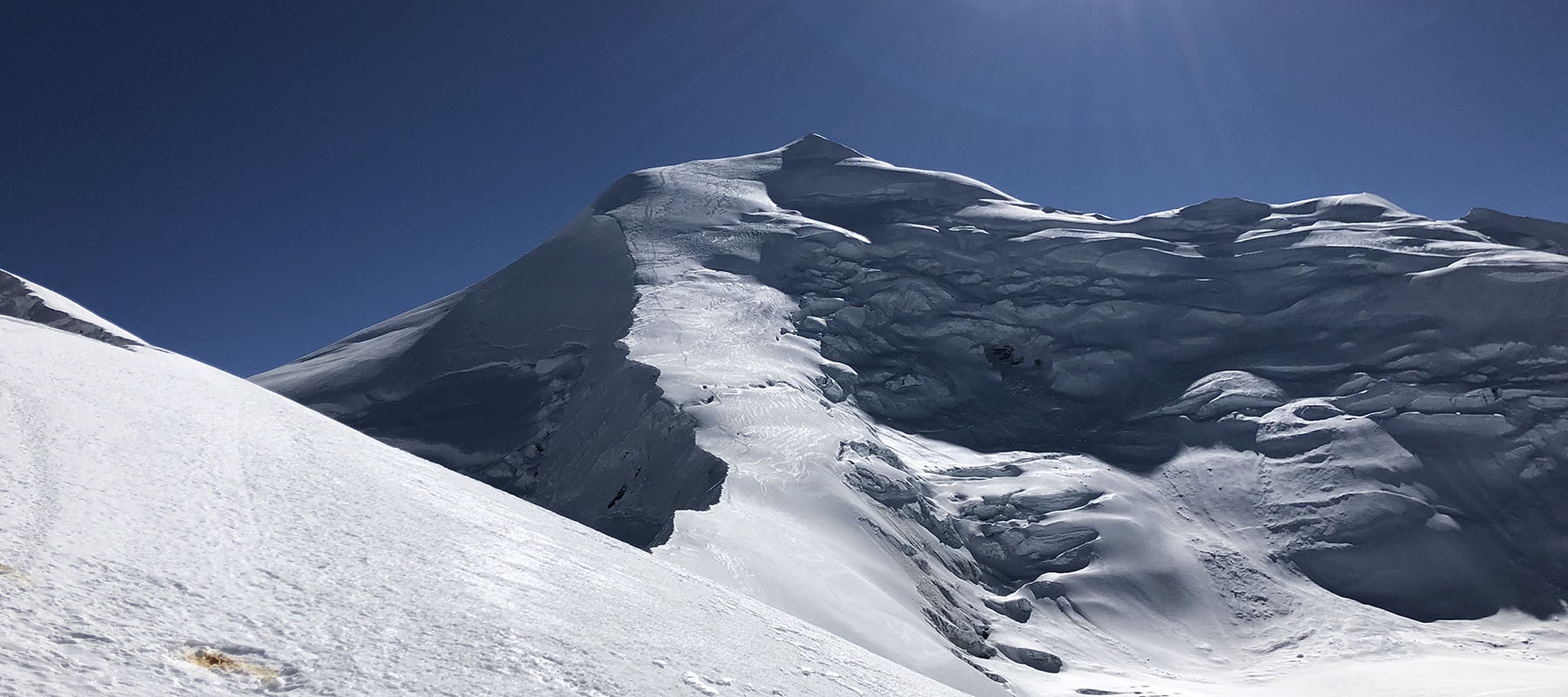
Exploring the southern skirts of the Annapurna Himalayas, the Mardi Himal Trek navigates isolated trails to the foothills of Mardi Himal (5,553 m). Offering views of the Annapurna range, including Annapurna South (7,219 m), Machhapuchhre (6,997 m), and Lamjung Himal (6,983 m), the trek takes place on trails with no human settlements. Thus, the trek is best suited for individuals seeking solitude and tranquility. The Mardi Himal Trek gracefully navigates through the revered Annapurna Conservation Area to offer a serene trekking experience.
The Mardi Himal trek typically lasts between 2 and 2 weeks. Trails generally go above 4,000 meters, and daily, you can expect to walk for about 5–7 hours. The perfect setting for an introduction to moderate & challenging trekking in Nepal. The activity level/physical rating is slightly more challenging than leisure and involves occasional difficult days. Expect ups and downs as well, for there will be hills to climb as well and the well-known ‘Nepali flat’ – a little bit up and a little bit down.
Itinerary Overview
Your journey to the Mardi Himal Trek officially commences as you arrive at Tribhuvan International Airport in Kathmandu. A drive to Pokhara takes you closer to the trails. The drive is filled with bountiful scenery of hillsides and gorgeous landscapes. After a short drive to Kande, the trek takes off and heads to Deurali. Immediately surrounded by lush forests, the trek follows the Modi River and heads to the Rest Camp. As the trails are away from the human settlements, you will be completely enveloped by the magnificence of the Annapurna Conservation Area. A trek through waterfalls, streams, and enchanting woodlands follows a brief rest at Rest Camp. With the Himalayas peaking above the emerald hills, the journey takes you to the High Camp.
The views of Annapurna South (7219m), Machhapuchhre (6997m), and Hiunchuli (6441m) cordially welcome you to the resting point. A trek to the Upper View Point is on schedule as an ascent along the scenic trail paved the way towards the glorious vantage point. The panorama of the Himalayas from Mardi Himal (5553m) to Machhapuchhre (6997m) and Annapurna I (8091m) allows you to relish the Himalayan majesty. Later, you retrace your steps back to the High Camp and settle for the day. A draining descent awaits as you take a different route and head to Landruk Village. Rejoicing the Gurung culture, you descend to Lumre and drive to Pokhara.
Mardi Himal Trek Itinerary
Arrival in Kathmandu
Arrival at Tribhuvan International Airport, Nepal. Upon completing the visa formalities and collecting your luggages in the airport, kindly proceed to the exit of the arrival hall. Your trip leader will await you just outside the arrival hall and will escort you to your hotel in Kathmandu. Please look out for a placard of Highland Expeditions at the exit of arrival hall. Welcome drinks will be served and after you’ve refreshed, your trek leader will brief you about your trip in the lobby of your hotel in the evening. Get familiar with your surroundings by taking a walk down the street
Meals:
Dinner
Accommodation:
Hotel
Max Elevation:
1350m/4430ft
Fly to Pokhara and explore...
After breakfast, we hop on a twenty-minute flight to Pokhara from Kathmandu airport. During the flight, the views from your window seat give you mesmerizing views of glorious Manaslu and the snow-capped Annapurna mountain range. Upon arriving Pokhara, you will be transferred to your hotel. Check in, have lunch and rest of the evening is free to explore.
Overall elevation gain tonight from previous night: -532m/1,716ft
Meals:
Breakfast,Lunch,Dinner
Accommodation:
Hotel
Max Elevation:
827m/2,714ft
Drive to Kande and trek to Australian Camp
After breakfast, you’ll drive from Pokhara to Kande, which takes about 1.5 hours. From Kande, the trek begins with a steady climb through terraced fields and dense forest for nearly 3 hrs. The trail goes on top of a ridge and, after a while, we arrive at Australian Base Camp. Australian Camp is a scenic hilltop destination at 2,060 meters in the Annapurna region of Nepal, offering unobstructed 360-degree views of the Annapurna Ranges.
Meals:
Breakfast,Lunch,Dinner
Accommodation:
Teahouse/Lodge
Duration:
2/3 hrs
O/N Elevation:
2,060m/6,757ft
Trek to Forest Camp
From Australian Camp, we will walk on the trail to the Forest Camp via Potana and Deurali. The journey lasts for approximately 6 hours, and we shall leave the main Annapurna sanctuary trail. Traversing through forests, we arrive at Forest Camp or Kokar. After having lunch, we head to Forest Camp, which comprises small teahouses and lodges. Overnight stay at Forest Camp.
Meals:
Breakfast,Lunch,Dinner
Accommodation:
Teahouse/Lodge
Duration:
6 hrs
Max Elevation:
2,550m/8,364ft
Trek to Low Camp
After breakfast at Forest Camp, the day’s journey begins towards Low Camp on the fifth day of our trek. Today, the trail becomes increasingly dense in the rhododendron forests and later transitions into a sparse landscape. The trail passes through moss-covered trees and ferns, creating a fairy-tale atmosphere that evokes a thrill among trekkers on the Mardi trek. A 4-5 hour trek from Forets Camp takes you to Low Camp. As you get to Low Camp, you’ll get a first glimpse of Mount Fishtail (Machhapuchhre). The low camp is a clearing in the forest that contains some teahouses. Day’s dinner and overnight at Low Camp’s tea house.
Overall elevation gain tonight from previous night: [500m/1,640ft]
Meals:
Breakfast,Lunch,Dinner
Accommodation:
Teahouse/Lodge
Duration:
4-5 hrs
Max Elevation:
3,050m/10,005ft
Trek to High Camp
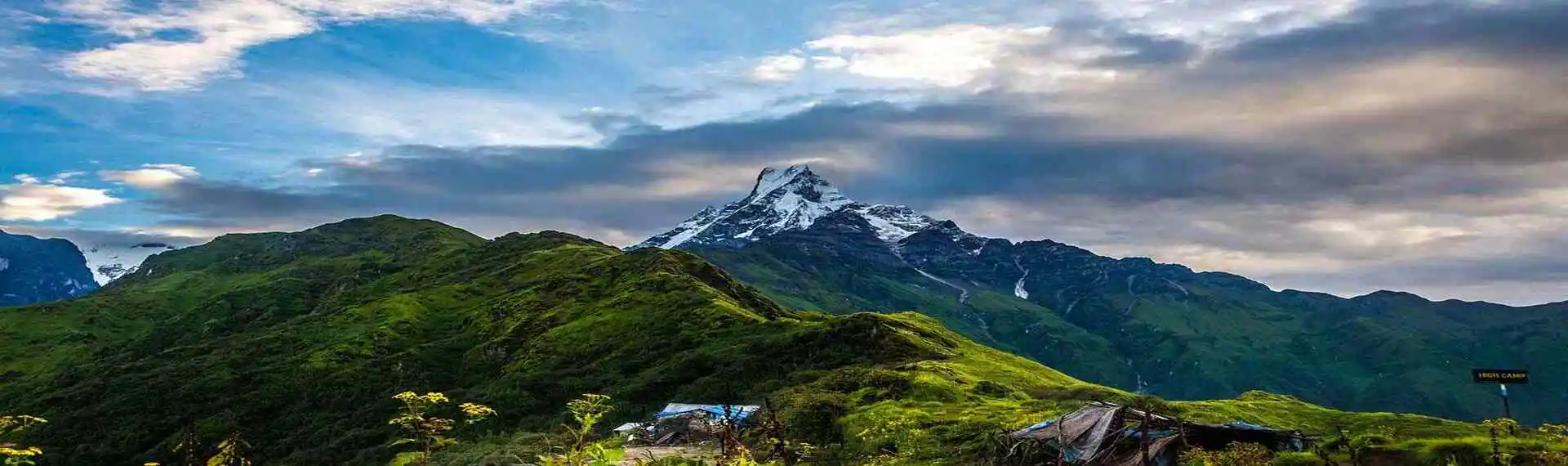
Today, our trek continues from Low Camp to High Camp. The route takes trekkers from tree-lined paths to alpine landscapes, following ridgelines accompanied by numerous mountain peaks. A 4-5 hour trek from Low Camp takes you to High Camp. The High Camp is pasture land and boasts gorgeous scenery all around. It provides amazing views of Annapurna (8091m), Hiunchuli (6441m), and Machhapuchhre (6997m). Overnight stay at High Camp.
Overall elevation gain tonight from previous night: [550m/1,810ft]
Meals:
Breakfast,Lunch,Dinner
Accommodation:
Teahouse/Lodge
Duration:
4-5 hrs
Max Elevation:
3,600m/11,810ft
Trek to Mardi Himal Base Camp/View Point and retrace to High Camp for overnight
Today is the major highlight of the trek which involves going to the Viewpoint or often called as the Mardi Himal Base camp. The ascent takes about 3 hours and if involves walking on the steep trail which goes through pastures and narrow ridges. The Mardi Himal base camp provides a panoramic view of the colossal mountains like Mardi Himal (5587m), Annapurna I (8091m), Annapurna south (7219m) and, Hiunchuli (6441m). After spending some time in the viewpoint, we shall retrace our steps back to the high camp. Overnight stay at High Camp.
Meals:
Breakfast,Lunch,Dinner
Accommodation:
Teahouse,Lodge
Duration:
6-7 hrs
Max Elevation:
4,500m/14,760ft
Trek to Landruk
After breakfast at Low Camp, we begin our trek towards Landruk. The trail gradually descends through lush forests, with most of the day spent walking downhill. Passing through beautiful woodland, numerous streams, and areas rich in local wildlife, the journey offers a pleasant and refreshing conclusion to the trek. After approximately 6 hours of walking, we arrive at the traditional Gurung village of Landruk, where we spend our final night on the trail. Surrounded by terraced fields and mountain views, Landruk provides a comfortable and rewarding end to our trekking adventure
Meals:
Breakfast,Lunch,Dinner
Accommodation:
Teahouse/Lodge
Duration:
6-7 hrs
Max Elevation:
1,850m/6,070ft
Trek to Syauli Bazar and Drive to Pokhara
After breakfast, we begin a short and easy descent to Syauli, which takes approximately 2 to 3 hours. The trail passes through terraced fields and traditional villages, offering a final glimpse of the landscapes that have accompanied us throughout the trek.
Upon reaching Syauli, we board our vehicle and drive back to Pokhara. The journey takes around 2.5 hours, depending on road conditions. After checking in to your hotel, the remainder of the day is free to relax, enjoy Pokhara’s lakeside atmosphere, or explore the town at your own pace.
Meals:
Breakfast,Lunch,Dinner
Accommodation:
Hotel
Max Elevation:
827m/2,714ft
Fly back to Kathmandu
We catch a plane from Pokhara airport and fly to Kathmandu. The flight lasts for 30 minutes and is filled with mesmerizing sights of the hilly and Himalayan landscapes. After arriving in Kathmandu, you can stroll around the local markets. You can also sightsee around some of the tourist attractions. Overnight stay in Kathmandu.
Meals:
Breakfast,Lunch
Accommodation:
Hotel
Max Elevation:
1,350m/4,430ft
Free day in Kathmandu
After more than a week’s trek, your knees must be hurting, and you need rest and time to stroll around Kathmandu. Thus, day eleven is your free day in Kathmandu. During the day, you can explore Kathmandu alone, rest, and go shopping. Still, if you’d like to participate in a city’s day tour, feel free to contact us; we’ll handle the trip for you. overnight at Kathmandu’s Hotel.
Meals:
Breakfast
Accommodation:
Hotel
International Departure
The final day is here. It’s your departure day; please provide us with the time of your flight. Our representative will pick you up from your hotel and drop you off at the airport, then bid you farewell. If you change your mind and would like to stay a little longer, please let us know. We’ll manage the trip to suit your preference and time. If not, we will have to say goodbye to you. Safe travels.
Meals:
Breakfast
Your safety is of imperative concern while traveling with Highland Expeditions. Please take care to note that your leader has the authority to amend or cancel any part of the itinerary if it is deemed necessary due to your safety concerns. Every effort will be made to keep to the above itinerary; however, since this adventure entails travelling in remote mountainous regions, we cannot guarantee that we will not deviate from it. Weather or health condition of a group member, unexpected natural disasters, etc., can all contribute to changes in the itinerary. The trek leader will try to ensure that the trip runs according to plan, but please be prepared to be flexible if required.
Mardi Himal Trek Departures
Our trips are available as both group departures and private experiences.
If you’re looking to join a group, simply click the Dates & Prices tab to view available dates, pricing, and current availability. The trip prices may increase or decrease based on availability and demand. All group departures are guaranteed to run once a booking is confirmed. If you prefer a private trip with your friends, family, or colleagues, visit the Private Trips tab and fill out the contact form. We’ll tailor the trip to your preferred dates and accommodate any special requests you may have.
Note for solo travelers: Some of our trips (see Group Size details) require a minimum of two participants to confirm the departure. If you’re booking as a solo participant, please contact us before making a booking to check availability for those departures.
Ready to create your perfect adventure? Please fill out the form below to share your preferences. We’ll get back to you with a customized trip designed around your goals, interests, and schedule. Let us handle the details — your journey, your way.
"*" indicates required fields
Cost Inclusion
- All meals (B,L,D) on OPEN/CHOICE Menu whilst on trek with tea & coffee.
- Twin sharing accommodation at Kathmandu guest house or similar category for 3 nights with breakfast
- Twin sharing accommodation at Hotel Dandelion or similar category for 2 nights
- Internal flight (PKR-KTM)
- All required permits for trek (ACAP & TIMS card)
- Experienced local trek leader with 1:4 assistant guide to client ratio
- Full support crew with 1 porter for every 2 trekkers
- Kathmandu airport transfers and escorts on private A/C vehicle
- All ground transportation as per mentioned in the itinerary on private A/C vehicle
- Comprehensive first aid kit.
- Duffel bag, Sleeping bag with liner and Down Jacket (Sleeping bag and down jacket must be returned after completion of trek)
- Staff equipment, insurance and allowances
- Trek completion certificate (Upon request)
- Group welcome dinner at Typical Nepalese Restaurant
Cost Exclusion
- International airfare, Visa and travel insurance
- Meals at Kathmandu
- Extra night accommodation in Kathmandu or on trek for any reason (Early arrival or delay, Early arrival from trek due to any reason)
- Personal expenses
- Gratuities for staff
FAQs
1. How much does the Mardi Himal trek cost?
2. Is Poon Hill a part of Mardi Himal Trek?
3. How long is the Mardi Himal Trek?
5. How difficult is the Mardi Himal trek?
6. Is the Mardi Himal trek beginner-friendly?
7. Are there tea house facilities en route to Mardi Himal?
8. Can I expect any wildlife sightings during the Mardi trek?
9. What is the daily elevation gain on the Mardi Himal trek?
10. Can I do the Mardi Himal trek within 3 to 4 days?
Guest Reviews of Mardi Himal Trek
See what our travelers are saying! Our reviews highlight the memorable experiences and exceptional service we offer. Read their stories to find out why our adventures are so highly praised.
Recommended by 99% of travelers -
 Loved by adventurers like you. 260+ glowing reviews and rated “Excellent” on Tripadvisor!
 -
 Guests rave about us — rated 4.9/5.0 on Trustpilot with glowing reviews!
 -
Loved by adventurers like you. 50+ glowing reviews and rated “Excellent” on Tripadvisor
-
 A guest favorite — 100% recommendation rate with 70+ happy reviews!


Grateful for the Support That Made My First Trek Possible!

Grateful for the Support That Made My First Trek Possible!
I have little experience on trekking and this was my first trail and was a tough one. Without the support and help from the trek leader and the porter, i would not have made it to the high camp. Thank you Phunuru and John for the great support during the hiking
Well-Organized Trip with Great Alternatives and Adaptable Guides!
Well-Organized Trip with Great Alternatives and Adaptable Guides!
The trip was well organized, although ABC was closed, they were able to quickly recommend Alternative route, Mardi Himal Trek.
The city tour especially Shivaratri festival was very crowded but the guide was able to bring us through the queue and to the right spot. The guide was able to adapt to our requirement as we are mainly photographer. Lastly, the porter (john) was a hero, big salute to him
Maximum Elevation Chart for Mardi Himal Trek
Temperature Condition During the Mardi Himal Trek
Mardi Himal Trek History and Location
Opened in 2012, the Mardi Himal trek route was established following the ridge towards the Mardi summit. Before 2012, the route was not used by tourists to access the Mardi Summit; instead, locals typically used it. As soon as the trekking route to Mardi Himal opened, its popularity began to grow. The Mardi Himal attracts national and international tourists and is ideal for those seeking a less crowded alternative to the more famous Annapurna Base Camp trek.
The Mardi Himal Trek is located in the Annapurna region of Nepal, within the Machhapuchhre Rural Municipality and the Annapurna Conservation Area. It lies in the Kaski district, east of the Annapurna Base Camp and close to the Machhapuchhre (Fishtail) mountain base. The Mardi Himal trek is a less-traveled destination that takes trekkers to the base of the iconic Mardi Himal (5,587m) and Mardi Himal Base Camp (4,500m). In addition, the trek to Mardi starts from Kande and ends at Syauli.
Major Attractions of Mardi Himal Trek
Mountain View
The panorama of mountain peaks is undoubtedly the major attraction of the Mardi Himal trek. The trip draws inbound and outbound tourists yearly because it offers a close view of the mountain within a short time and a moderate trek. The journey to Mardi Himal Base Camp offers views of the entire Annapurna range, including Annapurna I, II, III, IV, and Annapurna South. Likewise, Mount Machapuchhre, Hiunchuli, Mardi Himal, Dhaulagiri, Nilgiri, Varaha Shikhar, Tukuche Peak, Lamjung Himal, Gangapurna, and many more will accompany trekkers throughout the trek.
Annapurna Conservation Area
Another significant attraction of the Mardi Himal trek is the Annapurna Conservation Area (ACA). The conservation area is home to numerous species of wildlife and vegetation and offers a dramatic landscape and view at every step. The ACA is a gem of the Annapurna trekking route, from dense forests to charming villages and high ridges.
Cultural Experience
The Mardi Himal not only offers trekkers nature’s majesty but also attracts trekkers with its cultural experience. The trekking route to Mardi is known for the unique culture of the Gurung and Magar communities. Thus, the trek lets trekkers experience Nepali culture by witnessing traditional lifestyles, participating in village festivities (depending on the time of the year), and experiencing warm hospitality.
Peaceful Trails
Located in stunning mountain scenery, the Mardi Himal trek offers a peaceful trail, attracting those who prefer a solitary trekking experience. Unlike other popular trekking destinations, the Mardi Himal experiences fewer trekkers, providing a tranquil escape into nature’s beauty. Thus, the trek attracts those who love the sound of nature without disturbing people’s voices and those who want to escape from the hustle and bustle of their daily lives.
Weather and Temperature of the Mardi Himal Trek
| Month | Lower Region Temperature | Higher Regional Temperature | Weather |
| January | 5°C to 12 °C (day) and 0°C to -3°C (night) | -5°C to 5°C (day) and -10°C to -5°C (night) | Cold, clear skies, snowfall |
| February | 6°C to 14°C (day) and 1°C to 3°C (night) | -3°C to 7°C (day) and -8°C to -4°C (night) | Cold, clear morning, light snow |
| March | 10°C to 18°C (day) and 3°C to 7°C (night) | 0°C to 10°C (day) and -5°C to 0°C (night) | Blooming forests |
| April | 12°C to 20°C (day) and 5°C to 10°C (night) | 2°C to 12°C (day) and -2°C to 2°C (night) | Warm days, clear skies |
| May | 15°C to 22°C (day) and 8°C to 12°C (night) | 5°C to 15°C (day) and 0°C to 4°C (night) | Warm days, slight haze in the afternoon |
| June | 18°C to 25°C (day) and 10°C to 15°C (night) | 8°C to 16°C (day) and 2°C to 6°C (night) | Cloudy and rainy |
| July | 19°C to 26°C (day) and 12°C to 16°C (night) | 10°C to 17°C (day) and 4°C to 7°C (night) | Heavy rain, low visibility |
| August | 18°C to 25°C (day) and 11°C to 15°C (night) | 9°C to 16°C (day) and 3°C to 6°C (night) | Lush greenery, rainfall |
| September | 17°C to 24°C (day) and 10°C to 13°C (night) | 8°C to 14°C (day) and 2°C to 5°C (night) | Clear skies |
| October | 15°C to 22°C (day) and 8°C to 12°C (night) | 5°C to 12°C (day) and 0°C to 3°C (night) | clear sky, dry trails, best mountain views |
| November | 10°C to 18°C (day) and 5°C to 9°C (night) | 2°C to 10°C (day) and -3°C to 2°C (night) | cool and dry, clear sky |
| December | 6°C to 14°C (day) and 2°C to 6°C (night) | -3°C to 7°C (day) and -6°C to -2°C (night) | Cold, snowfall starts |
Is there any risk of altitude sickness during the Mardi Himal Trek
Yes, there is a risk of altitude sickness during the Mardi Himal Trek, as the trek takes trekkers to high altitudes. Although the trek poses a risk of altitude sickness, proper acclimatization and guidance can help you complete the trek successfully while mitigating the risk. The journey reaches up to 4,500m at the Mardi Base Camp, where the air becomes thinner and oxygen levels decrease, leading to the risk of altitude sickness, also known as acute mountain sickness.
Symptoms of Altitude Sickness:
- Tiredness
- Headache
- Lightheadedness
- Nausea
- Shortness of breath
- Fatigue
- Loss of appetite
- Difficulty Sleeping
Ways to Reduce Altitude Sickness During the Mardi Trek:
- Do not trek rapidly; trek slowly when letting your body give time to acclimate to the changed atmosphere.
- If necessary, add an acclimatization plan to your itinerary.
- Listen to your body and pay attention to symptoms of altitude sickness.
- Consult with your doctor and take medications that prevent altitude sickness symptoms.
- Consume nutritious food with a balanced diet and drink plenty of water.
- Avoid smoking and drinking, and limit caffeine.
- If you experience severe symptoms, descend to a lower altitude immediately.
Can you combine the Mardi Himal Trek with the Annapurna Base Camp Trek?
Yes, we can combine the Mardi Himal Trek with the well-renowned Annapurna Base Camp Trek. As both trekking routes lie within the Annapurna region in close proximity, combining the trips has become easier and is now a popular option. However, trekkers should consider that the cost will be higher while combining the trip, and the itinerary will be expanded. The combined trip of the Mardi Himal Trek with Annapurna Base Camp takes around 16-17 days in a round trip. Here is the general itinerary of the Mardi Himal with Annapurna Base Camp Trek:
Day 01: Arrival in Kathmandu
Day 02: Fly or drive to Pokhara
Day 03: Drive to Kande and trek to Deurali
Day 04: Trek to Forest Camp
Day 05: Trek to Low Camp
Day 06: Trek to High Camp
Day 07: Trek to Mardi Himal Base Camp and return to Low Camp.
Day 08: Trek to Jhinu Danda
Day 09: Trek to Bamboo
Day 10: Trek to Deurali
Day 11: Trek to Annapurna Base Camp
Day 12: Trek to Bamboo
Day 13: Trek to Jhinu Danda
Day 14: Trek to Ghandrul Phedi and drive to Pokhara
Day 15: Fly/ drive to Kathmandu
Day 16: Free Day in Kathmandu
Day 17: Departure
Note: The above itinerary is an example that can be customized according to the client’s preference.
Permits required for Mardi Himal Trek
The Annapurna Conservation Area Project Permit (ACAP) and the Trekkers Information Management System (TIMS) Card are required for the Mardi Himal Trek. Trekkers should carry the permits throughout the trek, as each checkpoint along the trail checks them. The costs of the permits help contribute to the conservation and improvement of the Annapurna region and its local communities. Additionally, trekkers will be fined if they do not obtain ACAP and TIMS permits while traveling to Mardi Himal.
The cost of the Annapurna Conservation Area Project Permit (ACAP) for Mardi Himal is as follows:
| Nationality | Price (Per person) |
| SAARC Nationals | NPR 1,000 |
| Other Nationality | NPR 3,000 |
The cost of the Trekkers Information Management System (TIMS) Card for Mardi Himal is as follows:
| Nationality | Price (Per person) |
| SAARC Nationals | NPR 300 is for those going through an agency, and NPR 600 is for those without an agency. |
| Other Nationality | NPR 2,000 |
When should trekkers experience the Mardi Himal Trek?
Trekkers should experience the Mardi Himal Trek at a time when the weather is clear, the temperature is stable, and the trekking trails are dry and safe. In Nepal, Spring and Autumn are the ideal times for trekking, including for Mardi Himal.
Spring/ Pre-monsoon (March to May)
Spring is one of the ideal times for trekkers to experience the Mardi Himal trek. Starting in March, spring brings fresh vegetation and the blossoming rhododendrons that adorn the trail. Likewise, the season has a mild temperature that is neither too hot nor too cold, making the trekking conditions ideal. Additionally, the season offers excellent mountain views of the Mardi Himal and the Annapurna ranges.
Autumn/ Post-monsoon (September to November)
Autumn is one of the most experienced times of the year for the Mardi Himal Trek. It comes after the monsoon season, and the clean and clear environment is the prominent highlight of the season. From September to November, autumn lasts, bringing stable weather with clear skies. Due to the clear skies, the mountain visibility is also incredible at this time. In addition, the rain stops by the time of Autumn, making the trail dry.
Join us on similar trips in the same region