

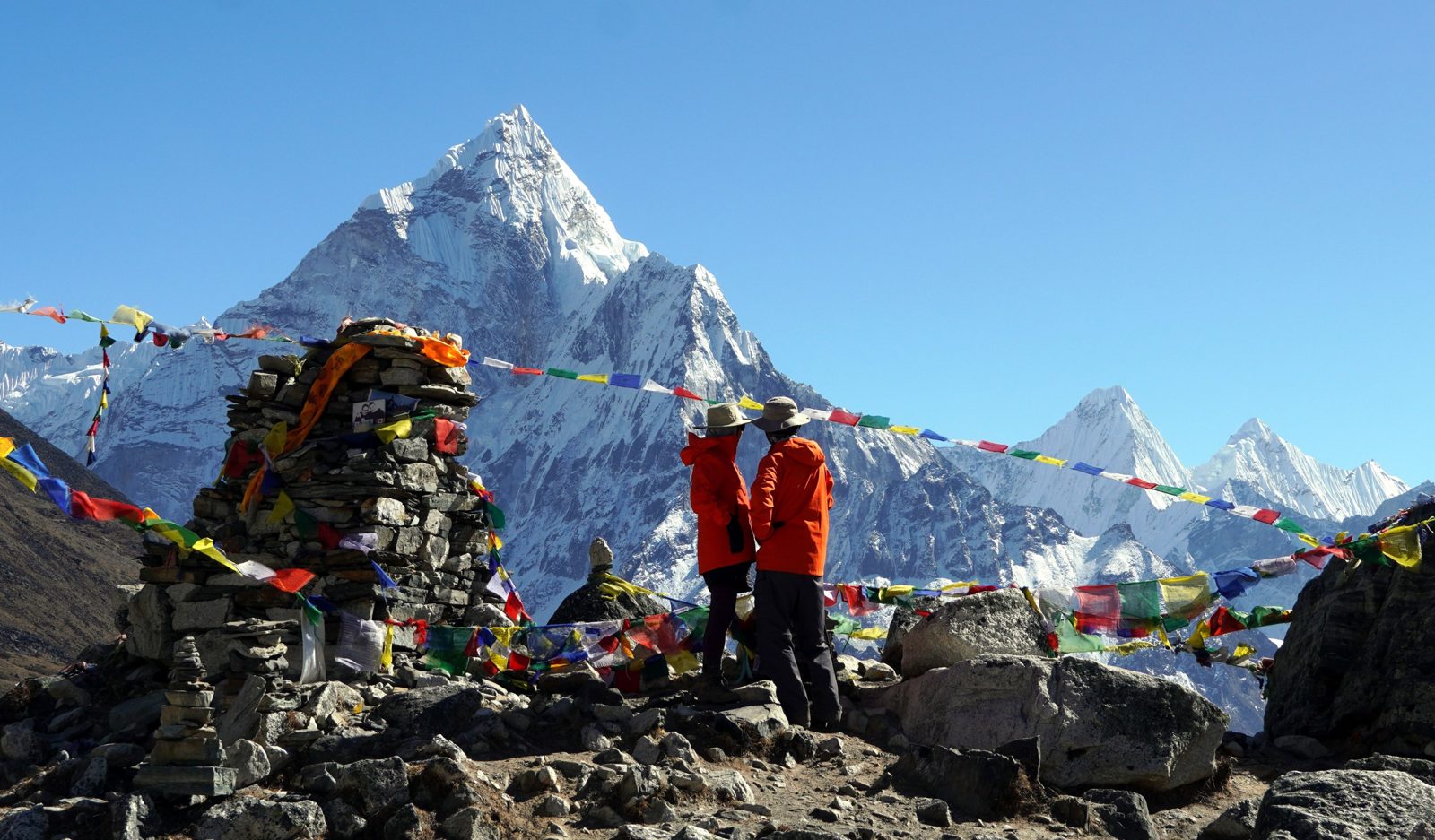
Island Peak and Ama Dablam both rise above the trails of the Khumbu, and both appear on the wish lists of people who want to climb in Nepal. They are very different undertakings. Island Peak is a trekking peak that fit beginners can attempt with the right training and guides. Ama Dablam is a serious technical expedition that most climbers approach after years of experience. This guide compares them on height, difficulty, experience, cost, time and risk, so you can match the climb to where you are now.
Table of Contents
Ama Dablam vs Island Peak at a glance
| Island Peak (Imja Tse) | Ama Dablam | |
|---|---|---|
| Summit height | 6,189 m (20,299 ft) | 6,812 m |
| Type | Trekking peak | Technical expedition peak |
| Typical grade quoted by operators | Alpine PD+ | Steep, technical, exposed; no single grade agreed |
| Experience needed | Fit beginners with training and a short skills session | Real mountaineering background, ideally earlier climbs above 6,000 m |
| Highland trip length | 21 days with Everest Base Camp acclimatisation | 30 days, including a Lobuche warm-up |
| Highland price from | USD 3,199 | USD 7,499 (2026); USD 7,699 (2027) |
| Group size (Highland) | 1 to 12 | 1 to 10 |
How tall and how hard is each climb?
Island Peak, also called Imja Tse, is 6,189 m (20,299 ft). Most operators grade it Alpine PD+, which means moderately difficult, with a glacier walk across crevasses, then a steep final headwall of roughly 100 m that is climbed on fixed rope with ascenders. Summit day starts before midnight and reaches the top around mid-morning, according to one operator’s description.
Ama Dablam, at 6,812 m, is lower than the big eight-thousanders but far steeper and more exposed than Island Peak. The route is famous for three sections:
- Yellow Tower: a steep granite pitch at around 5,900 m
- Grey Tower: a mix of loose rock, snow and ice
- Mushroom Ridge: a knife-edge traverse
Fixed ropes are used, but they do not replace technique: you need to be comfortable with ascenders, descending on rope and moving on exposed ground. Operators describe the climb as steep, technical and serious, and the main hazards include falls, avalanche and icefall from a hanging glacier, and weather that changes quickly.
What experience do you need?
For Island Peak, operators say first-time climbers can succeed with good fitness, a positive attitude and preparation. A common recommendation is about three months of regular training, plus a few days practising with crampons, an ice axe and a safety rope before the climb. Experience with crampons and altitude trekking helps, but it is not usually a hard requirement.
Ama Dablam is different. You should arrive with real mountaineering experience, ideally earlier climbs above 6,000 m, solid rope-handling skills and the composure to work on exposed terrain. A sensible way to build up is to climb Island Peak or Lobuche first, then spend time on technical alpine routes before attempting Ama Dablam. Highland’s Ama Dablam itinerary builds this into the trip by including a Lobuche climb for acclimatisation.
Time, cost and support compared
Highland’s Island Peak climb runs 21 days from USD 3,199 and combines the Everest Base Camp trek for acclimatisation, with acclimatisation days at Namche and Dingboche. The package lists peak permit fees, a garbage deposit, trek permits and an NMA peak certificate as included, along with a lead guide and a first-aid kit with supplementary oxygen.
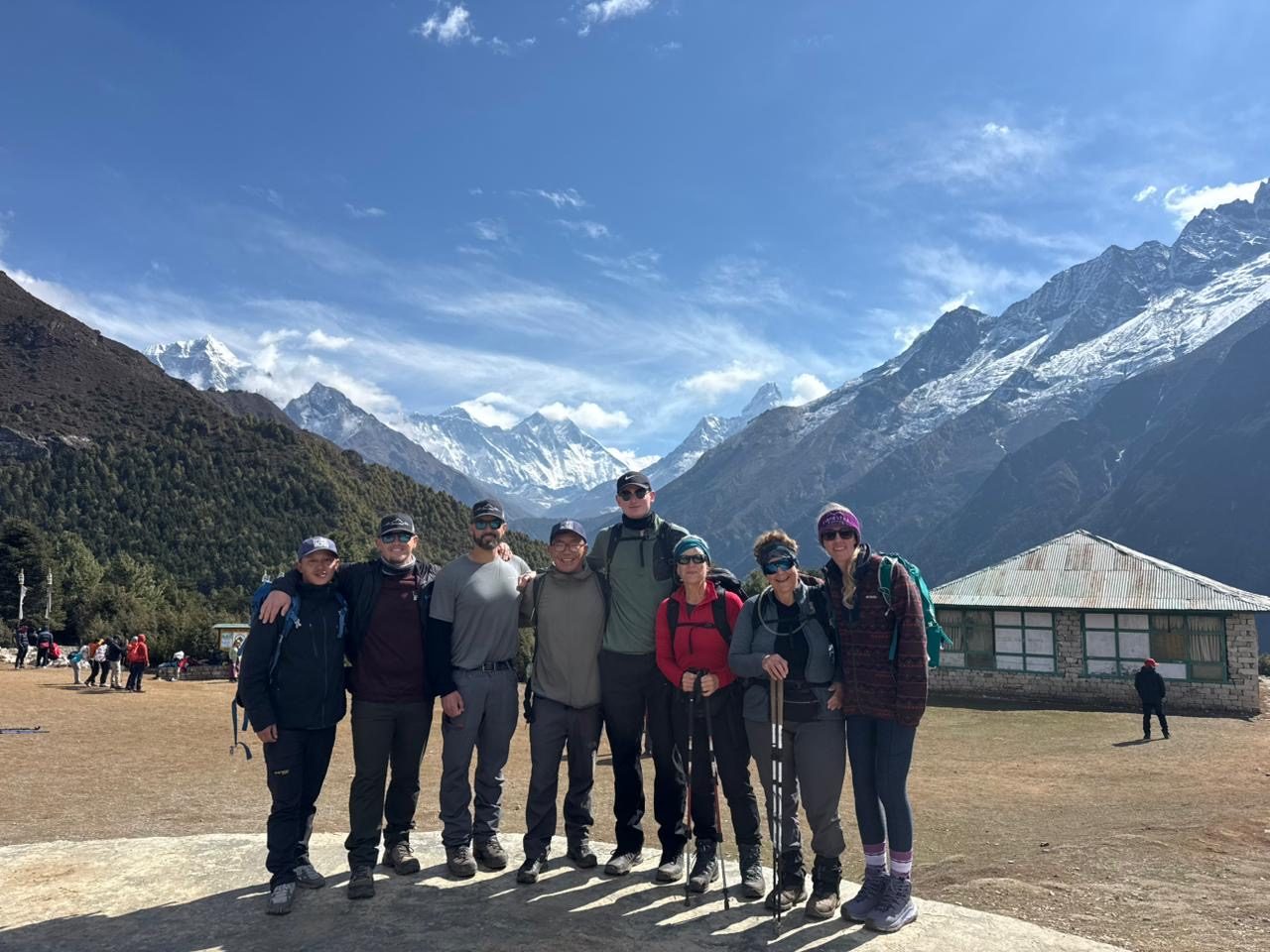
Highland’s Ama Dablam and Lobuche expedition runs 30 days from USD 7,499 for 2026 departures and USD 7,699 for 2027, with a maximum group size of 10. It lists the Ama Dablam climbing royalty of USD 1,000 per climber, the Lobuche permit and the liaison officer’s wages as included, with a one-to-one Sherpa ratio on the Ama Dablam summit push and emergency oxygen. Summit bonuses and base-camp staff tips are listed as extras. Compare packages by what is included rather than by headline price.
Government fees also differ by season. The Island Peak royalty is USD 350 per climber in spring and USD 175 per climber in autumn, while the Ama Dablam royalty is USD 1,000 per climber in both spring and autumn. Fees are set by the authorities and can change, so confirm the current figure with your operator before you book. Spring, March to May, is the dearest season.
What does the climb itself look like?
Island Peak is usually climbed after an acclimatisation trek through the Khumbu, often with the Everest Base Camp route. You move up to a base camp at about 5,100 m (16,728 ft), then a high camp or a very early start, then cross the glacier in the dark to reach the headwall at first light. The summit day is long and cold. A common pattern is leaving around midnight, reaching the top mid-morning, and returning to camp the same day. The technical part is short, but you do it at nearly 6,200 m, tired and cold, which is why training and a rope-skills session matter.
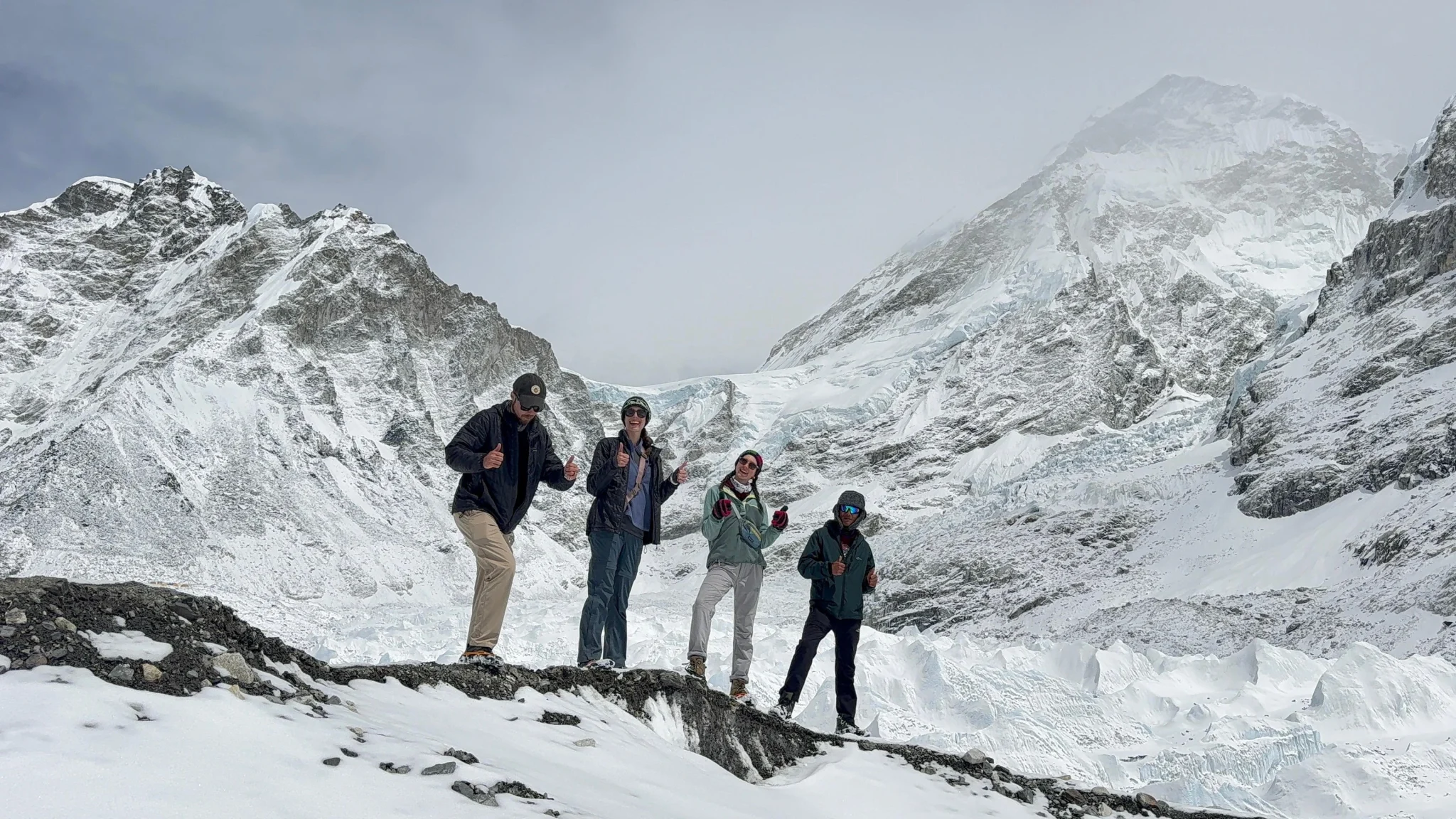
Ama Dablam is a multi-day climb on the mountain. Operators describe the camps like this:
- Base camp: about 4,600 m
- Camp 1: about 5,700 m
- Camp 2: about 5,950 m, with limited tent space
- Camp 3: about 6,300 m. Many teams skip sleeping there because of avalanche risk from a hanging glacier, and summit directly from Camp 2.
You spend several days moving between camps, carrying loads, fixing and following ropes, and waiting for weather. It is much closer to a small expedition than to a long walk with a summit at the end.
What about safety, insurance and rescue?
Both climbs carry real risk, and Ama Dablam carries more. Falls, rockfall, avalanche, cold and altitude illness are the hazards on both, and rescue on a steep technical mountain is slower and more complicated than on a trail. Nepal’s rules require expedition teams to carry accident and medical insurance for staff, and trekking-peak guides for foreign climbers are covered under a separate arrangement, with the option to opt out if you can show valid helicopter-rescue and medical insurance. You should still carry your own policy that covers climbing at your target altitude, with helicopter evacuation, and you should check that it does not exclude technical climbing.
Ask how many guides will be on the mountain with you. Highland says it uses one senior climbing leader and one climbing Sherpa per three participants on its climbs, and its Ama Dablam page describes a one-to-one Sherpa ratio on the summit push. A low ratio matters more on Ama Dablam than on Island Peak, because the person next to you on the rope is your safety margin. More on how the company approaches this is on its safety page.
How should you train for each?
For Island Peak, the focus is endurance and altitude: long hikes with a loaded pack, stair or hill sessions, and enough weeks of consistent training that a multi-week trek does not exhaust you. Add a few days on snow or ice learning to move in crampons, use an ice axe and handle fixed rope. Highland has a guide on how to train for high-altitude treks and climbs that covers the basics.
For Ama Dablam, endurance is the minimum. You also need technical fluency: rock and mixed climbing, efficient rope handling, and the habit of staying calm on exposed ground when you are tired. Many climbers build that on technical alpine peaks before they commit to the expedition, and use a trip like Island Peak or Lobuche to test their body above 6,000 m.
Which should you choose?
Choose Island Peak if:
- this would be your first 6,000 m summit
- you are comfortable with steady effort at altitude
- you are willing to train, learn rope skills and accept a long cold summit day
It is the usual first Himalayan peak for a reason, and it can be combined with the Everest Base Camp trek so the acclimatisation is built in.
Choose Ama Dablam if:
- you already climb steep rock, ice and mixed ground
- you have been above 6,000 m before
- you want a committing, technical objective
If you are not sure you meet that bar, treat Island Peak or Lobuche as your step towards it, not as a detour.
Frequently asked questions
Is Ama Dablam harder than Island Peak?
Yes, by a large margin. Ama Dablam is steeper, more exposed and more technical, and it is considered a serious expedition peak.
Can a beginner climb Island Peak?
Operators say fit beginners can, with several months of training and a skills session with crampons, ice axe and rope. You still need to be comfortable at altitude.
How long does each climb take?
Highland’s trips run 21 days for Island Peak with Everest Base Camp and 30 days for Ama Dablam with Lobuche.
How much do Ama Dablam and Island Peak cost?
Highland lists Island Peak from USD 3,199 and Ama Dablam from USD 7,499 for 2026 (USD 7,699 for 2027). Check what is included, since permits, royalty and extras differ.
Should I climb Island Peak before Ama Dablam?
It is a common stepping stone, along with Lobuche and technical alpine climbing, because it builds altitude and rope skills.
When is the best season?
Pre-monsoon (spring) and post-monsoon (autumn) are the main windows. Check dates on each package page.

