

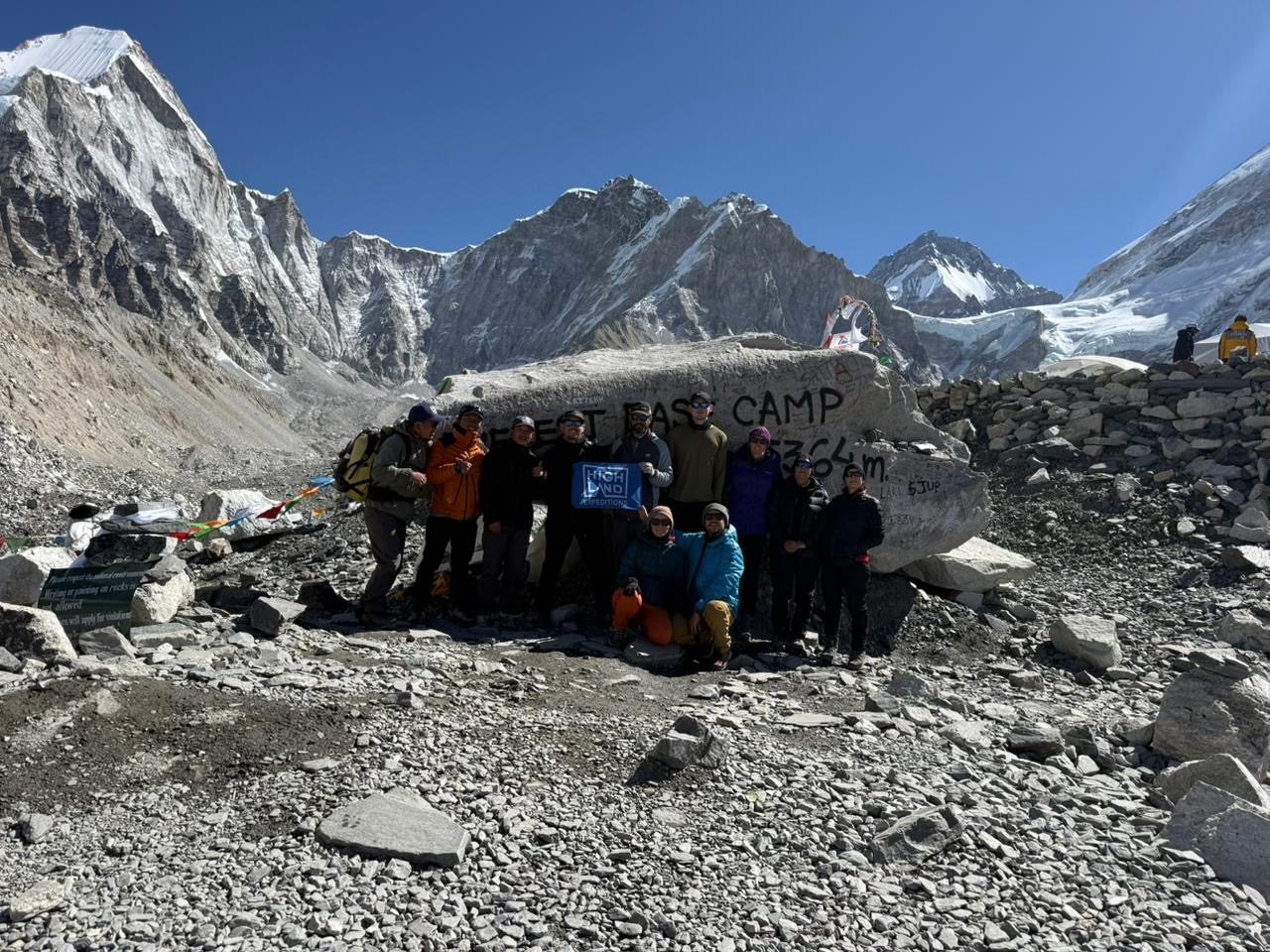
The Everest Base Camp trek is a walk, not a climb, and large numbers of people complete it every season without serious problems. It is also a walk that takes you above 5,000 m, days away from a hospital, in weather that can close the only airstrip. So the honest answer to “is it safe?” is that it depends on your preparation and on how your trip is staffed. This guide separates the real risks from the marketing, explains what a Sherpa and guide team actually does, and shows how oxygen, insurance and helicopter rescue work in practice.
Table of Contents
What are the real risks on the Everest Base Camp trek?
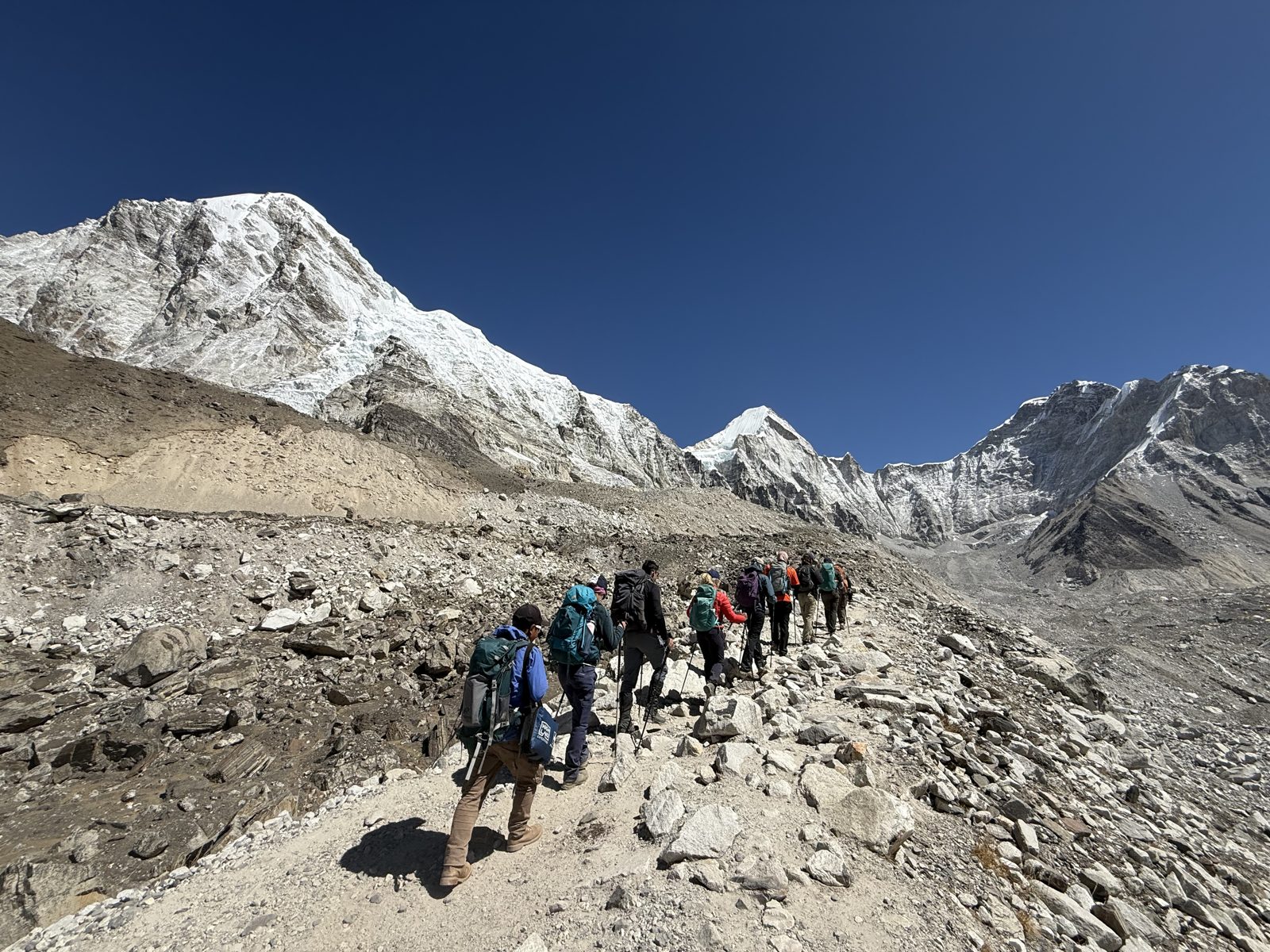
Altitude illness is the main one. Acute mountain sickness can affect fit and unfit trekkers alike, and the more serious forms, fluid on the lungs or brain, are rare but dangerous. Most operators, Highland included, deal with this through gradual itineraries with acclimatisation days, for example at Namche and Dingboche, and through guides who watch for symptoms every day. If you want the symptom-level detail, read our guide to Everest Base Camp altitude sickness.
The other risks are more mundane:
- Flight delays: flights to Lukla depend on weather and delays are common, which can squeeze a tight schedule.
- Trail traffic: trails are shared with yak trains and porters, so step to the inside of the path and let them pass.
- Cold and ice: winter brings both.
- Stomach upsets: common on any high trek, which is why guides push boiled or treated water and cautious eating.
None of these is exotic, and almost all of them are managed by good planning rather than luck.
What does a Sherpa and guide team actually do?
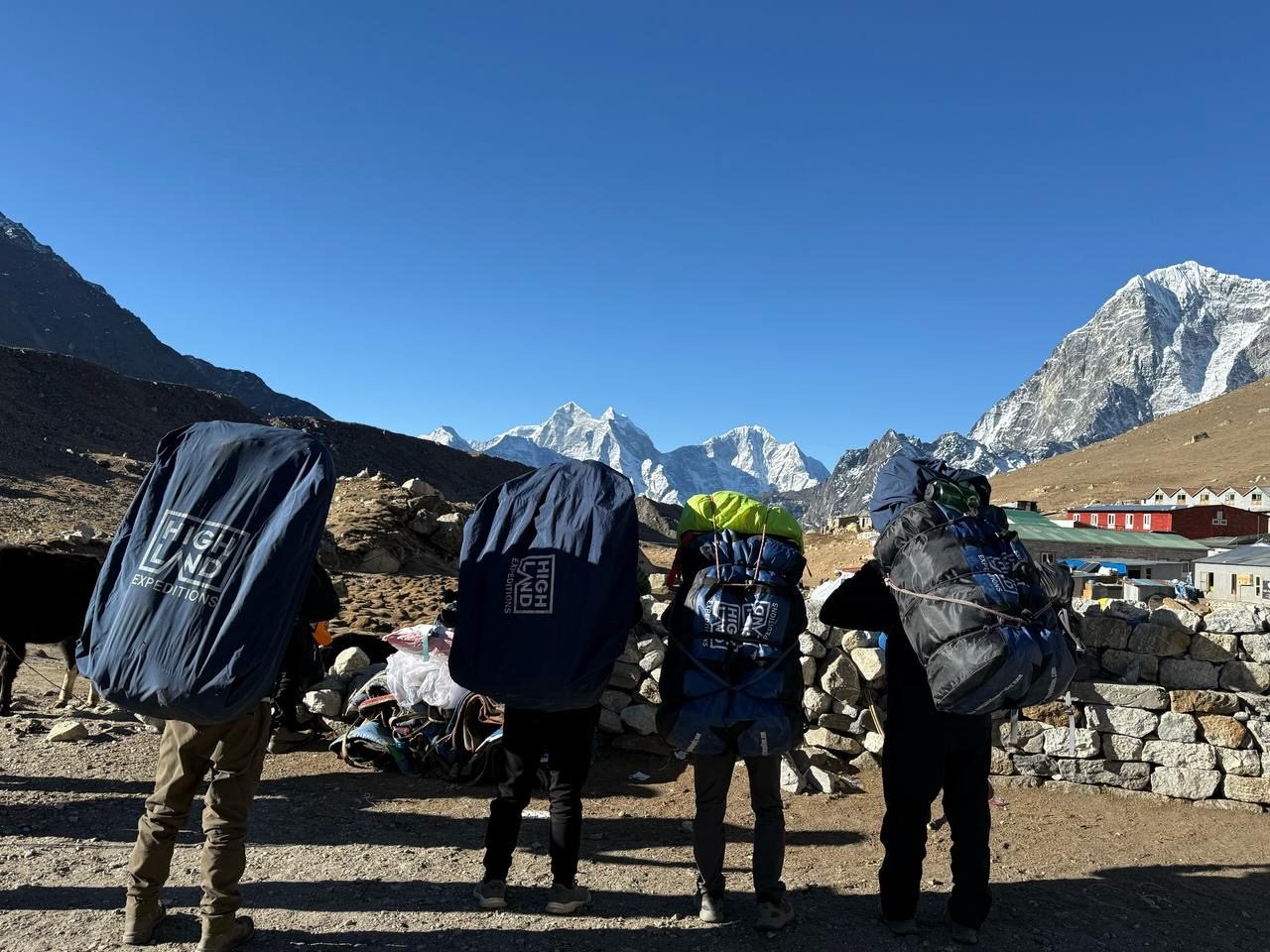
“Sherpa” is both an ethnic group and, in trekking, shorthand for a mountain guide or climbing support staff. On a trek like this, the roles are usually simple. A lead guide sets the pace, makes the call on whether to continue, and is the person who assesses you if you feel unwell. Assistant guides split the group so nobody is left at the back, and porters carry your bags so you can walk at altitude with a light pack.
Highland’s own pages state the following:
- one lead guide, one assistant guide for every four trekkers, and one porter for every two trekkers
- guides are full-time employees rather than outsourced
- guides are trained in first aid and altitude illness, with first-aid skills refreshed every two years
- an annual guide training programme, the latest session held in Kathmandu from 26 to 29 August 2026, covering hands-on first aid, leadership and emergency response
Those are the company’s own claims, so treat them as a checklist to ask other operators about as well, not as proof.
One more point matters more than the ratio: authority. Highland’s trip terms say guides can change or cancel parts of the itinerary for safety reasons. That is the behaviour you want. A guide who can turn the group around, or order a descent, without arguing with a client’s schedule is worth more than a bigger team that cannot.
What medical help exists on the trail?
There are no hospitals on the route, but there is some structure. The Himalayan Rescue Association runs an aid post at Pheriche, at about 4,250 m, which has a clinic building and a helipad, according to Adventure Alternative’s trek emergency guide. During the April and May climbing season there is also a volunteer-doctor station at Everest Base Camp itself. Highland’s website adds that health posts with doctors operate at Namche, Dingboche and Pheriche during the high season, and that these posts can stabilise a patient and coordinate onward care or evacuation. Opening times and staffing change, so ask your operator what is running on your dates.
Does a guide carry oxygen and a medical kit?
Ask this before you book, because answers differ. Highland says it carries its own supplementary oxygen system and a comprehensive first-aid kit with high-altitude medication on all treks, and that oxygen is provided to clients in an emergency at no extra cost. It also says lodges that supply oxygen often have limited stock and can charge roughly USD 150 to 200 per hour. That price comparison is Highland’s claim, but the underlying point is fair: if your operator relies on lodge oxygen, you are depending on a stranger’s supply.
Keep oxygen in perspective. It buys time and eases symptoms, but descent is the treatment for serious altitude illness. A good guide uses oxygen to stabilise you while you go down, not as a reason to stay up.
How do helicopter evacuation and insurance work?
When someone cannot walk down, the usual path is a helicopter. According to Adventure Alternative, the helicopter company first confirms it can fly safely to the location, then wants a payment guarantee, which your insurer provides after opening a case number. That is why your insurer’s details need to be with your guide from day one. Rescue is also weather-dependent, so a helicopter is not guaranteed on the hour you need it. If it cannot fly, local staff arrange alternatives such as a stretcher or horse to a landing point.
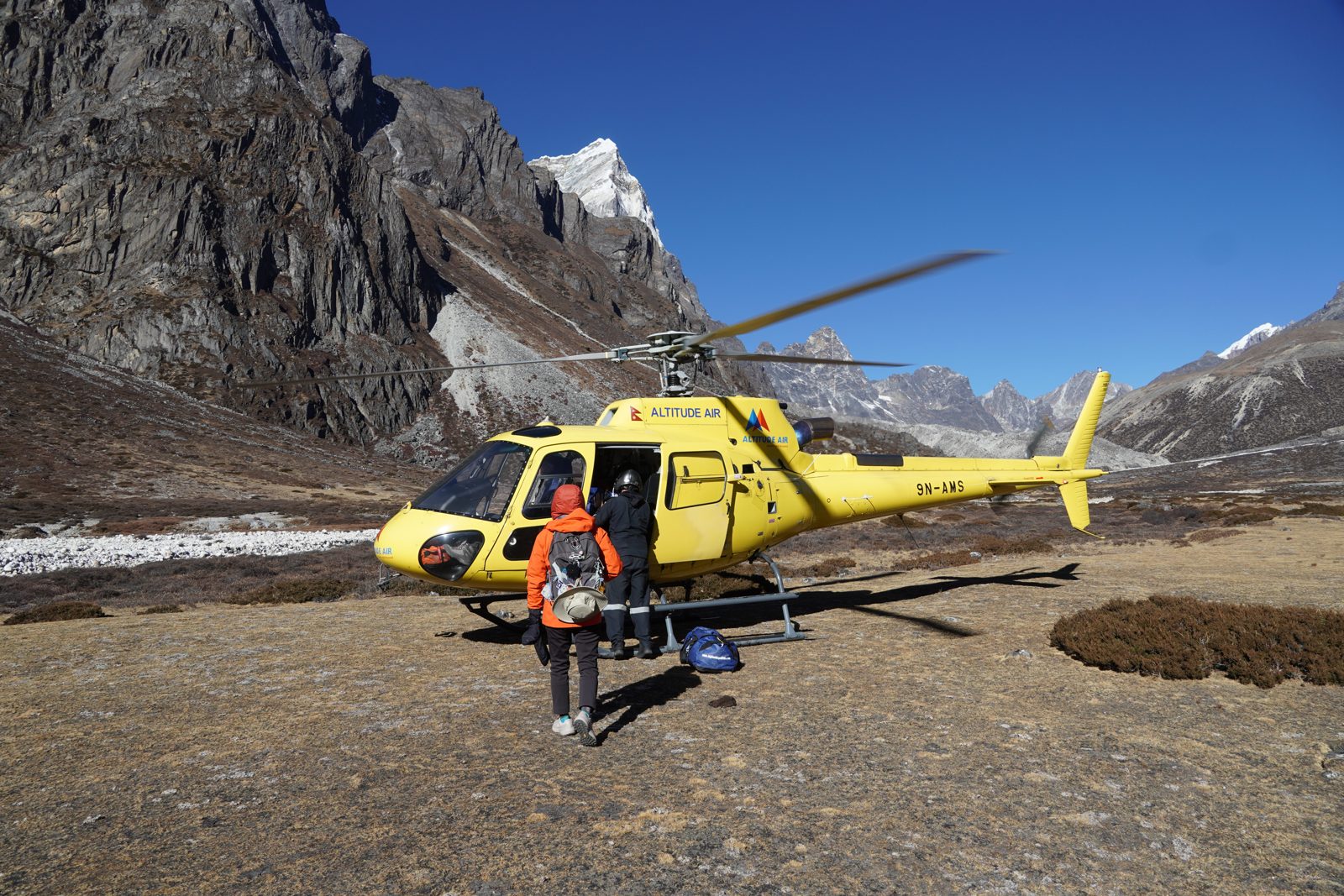
There is no single price for a rescue. It depends on the distance, the departure point and what else the pilot is doing, and one operator puts the maximum at about USD 10,000 from Everest Base Camp. This is why insurance is not optional in practice. Highland lists personal travel insurance as a cost you arrange yourself, and says its team coordinates with your insurer and manages the rescue arrangements. Before you buy a policy, check in writing that it:
- covers trekking up to the highest altitude on your route
- includes helicopter evacuation
- does not exclude “mountaineering” in a way that could include your trek
What if the Lukla flight is cancelled?
Weather delays are a safety issue as well as an inconvenience, because they tempt people to rush later. Highland says its itineraries include contingency days, and that if flights are cancelled it will try to arrange a helicopter, which can sometimes fly when planes cannot. It adds that you pay the extra cost, which it puts at roughly USD 300 to 500 or more. Build a buffer of a few days at the end of your trip, and never book a tight international connection on the same day you plan to fly back from Lukla.
How to judge the safety of any trekking operator
Whichever company you choose, ask for these in writing:
- the guide-to-trekker ratio, and whether guides are full-time staff
- what first-aid and altitude training they hold, and how recent it is
- whether the company carries its own oxygen and a satellite phone
- who coordinates with your insurer, and how fast
- whether contingency days are built in
- whether the company is licensed in Nepal
Highland publishes its licensing details on its licensing and bonding page, which is the sort of document to ask any operator for. A company that answers these questions clearly is usually the one that has thought about the day something goes wrong.
Frequently asked questions
Is the Everest Base Camp trek dangerous? It is a demanding high-altitude trek with real risks, mainly altitude illness, but it is routinely completed by first-time trekkers who prepare, go up gradually and listen to their guide.
Do I need travel insurance for the Everest Base Camp trek? You should have it. Rescue costs are high and the helicopter company needs an insurer’s guarantee. Confirm that your policy covers trekking to your highest altitude and helicopter evacuation.
Do I need a guide for Everest Base Camp? A guide is not legally required for the Everest treks at present, although the rules have changed in recent years, so confirm the current requirement with a registered operator. Rule or no rule, a guide is your first line of medical and navigational support.
What happens if I get altitude sickness on the trek? The guide assesses you, stops the ascent, and descends if symptoms persist or worsen. Oxygen and medication can help while descending, and the guide contacts your insurer if evacuation is needed.
How many guides and porters will I have? It varies by company. Highland states one assistant guide per four trekkers and one porter per two trekkers, alongside a lead guide.
Is Everest Base Camp safe for first-timers? Yes for many, provided you train, build in acclimatisation days and are honest with your guide about how you feel. See Highland’s guide on how to train for high-altitude treks.

